Effective hard water spots on car removal involves using a diluted vinegar solution or specialized acidic cleaners to dissolve mineral deposits before they bond to the surface. If the minerals have caused deep etching into the clear coat or glass, DIY methods typically fail and professional machine polishing is necessary to restore the finish. Promptly drying your vehicle after it gets wet and applying protective sealants can prevent these stubborn deposits from forming in the first place.
Nothing ruins the satisfaction of a fresh detail quite like the discovery of stubborn, chalky rings clinging to your clear coat. You have scrubbed, rinsed, and dried, yet those ghostly mineral deposits remain visible under the light. This frustration is more than just a cosmetic nuisance; it represents a chemical bond that threatens the integrity of your vehicle's finish. When calcium and magnesium minerals sit on your paint, they begin a process of degradation that can lead to permanent etching. In this guide, we explore the science behind these deposits and examine why common household solutions like vinegar often fall short. You will learn how to identify the three stages of water spot damage, discover safe techniques for glass restoration, and understand when professional correction is necessary to save your paint.
The Science of Hard Water Spots: Why Your Car Looks Dirty After a Wash
Many car owners in Upper Darby and Havertown are frustrated when a fresh wash leaves behind stubborn white rings. These marks are not simply leftover dirt; they are complex mineral structures. When tap water, which is high in dissolved calcium and magnesium, evaporates off a vehicle’s surface, these minerals stay behind. While rainwater is generally soft and free of these specific dissolved solids, the residential water lines feeding our local homes often contain high concentrations of these elements.
The chemical reaction happens quickly. When a sprinkler hits your car during a sunny afternoon, the heat accelerates evaporation. In as little as five minutes, the liquid disappears, leaving behind a crystalline mineral deposit that bonds to the clear coat. These are not merely resting on the surface; they are chemically attracted to the paint.
Understanding this distinction is vital for effective hard water spots on car removal. A standard soap and water wash will not dissolve these bonds because the minerals have solidified into a rock-like crust. Dealing with these stubborn deposits often requires specialized techniques found in professional mobile detailing to ensure the minerals are neutralized without scratching the underlying finish. These spots are essentially thin layers of limestone, requiring a chemical or mechanical strategy to break the bond rather than simple friction.
The Three Stages of Water Spot Damage
Because these mineral structures are chemically active, the severity of the problem depends entirely on how long the water sits on the surface. Detailing professionals categorize this progression into three distinct stages, each requiring a different level of intervention to achieve effective hard water spots on car removal.
### Stage 1: Topical Deposits These are fresh deposits that have not yet formed a strong bond with the substrate. If you catch a sprinkler overspray within a few hours and the surface temperature has remained relatively low, the minerals are simply sitting on top of the clear coat. In this stage, the minerals are loose. A standard wash or a quick detailer spray usually provides enough lubrication and surfactant action to lift the minerals before they solidify into a crust.
### Stage 2: Bonded Minerals Once the water evaporates completely, especially under the heat of the sun, the minerals undergo a phase change and bond to the surface. At this point, the white rings will not budge with standard soap and water. They have become a physical mineral crust that is chemically attracted to the paint. To remove these safely, specific chemical intervention is required to break the ionic bond. Without specialized cleaners, attempting to scrub these off with a wash mitt will likely result in micro-marring the finish. Many vehicles seen in professional mobile detailing require this chemical neutralization to safely clear the surface.
### Stage 3: Etching This is the most severe tier and addresses the common question: Can water spots be permanent? In this stage, the answer is yes. Etching occurs when the alkaline minerals react with the clear coat, physically eating into the paint. This creates a microscopic crater or valley in the surface. The mineral is no longer just sitting on the paint; the paint itself has been structurally compromised. Etching cannot be washed or chemically dissolved away. It requires professional paint restoration and protection through mechanical leveling, where the surrounding clear coat is carefully polished down to the depth of the crater to restore a flat, reflective surface.
Why DIY Methods Like Vinegar Often Fail
Many vehicle owners in Havertown turn to internet forums for advice, which frequently suggests a simple 1:2 mixture of white vinegar and distilled water. While this sounds like a cost-effective solution for hard water spots on car removal, the reality often falls short of expectations for several technical reasons.
White vinegar contains acetic acid, which is effective at dissolving fresh, Stage 1 calcium deposits. However, once minerals reach Stage 2 and form a hardened crystalline bond with the clear coat, acetic acid is simply too weak to penetrate the structure. Forcing a weak acid to do the job of a specialized mineral remover usually leads to a secondary problem: physical damage. When the chemical does not dissolve the spot, users often apply more pressure with a towel or sponge. Because these minerals are essentially tiny rocks, scrubbing them without high-lubricity automotive soaps leads to micro-marring, creating thousands of tiny scratches that dull the paint finish.
A common concern among DIYers is whether vinegar will damage a windshield. The answer is no; acetic acid is safe for automotive glass and will not cause chemical degradation. However, it is frequently ineffective at removing stubborn spots on glass because the minerals have settled into the microscopic pores of the surface.
Repeatedly applying vinegar without success can also strip away existing waxes or sealants, leaving the paint even more vulnerable to the next rainstorm or sprinkler cycle. For vehicles where spots have baked in under the sun, skipping household hacks in favor of professional mobile detailing ensures the use of pH-balanced, high-lubricity cleaners that protect the surface during paint restoration and protection.
Household Chemicals to Avoid: CLR and WD-40 Warnings
Moving beyond vinegar, many owners in Upper Darby look for stronger household solvents to clear their paint. This often leads to the question: Can I use CLR on my car? The short answer is a firm no. CLR is formulated for porcelain and chrome bathroom fixtures. On a vehicle, the acidic concentration is far too aggressive for the sensitive clear coat layer. Using it risks permanent staining on rubber seals and can flash-dry on plastic trim, leaving behind white chalky damage that is far more difficult to repair than the original water spots.
Another common internet myth involves WD-40. While homeowners ask if WD-40 removes hard water spots on car surfaces, the chemical composition tells a different story. WD-40 is a petroleum-based lubricant, not a mineral dissolver. When applied, the oil fills the microscopic craters of the water spot, making it temporarily invisible to the eye. However, the minerals remain bonded to the paint. Once the oil evaporates or is washed away, the spots reappear. Furthermore, the oily residue attracts road grime and dust, complicating the paint restoration and protection process.
Instead of reaching for under-sink chemicals, stick to purpose-built automotive products for hard water spots on car removal. These formulas use safer acids in controlled concentrations, specifically designed to lift minerals without degrading the clear coat. If these retail products fail, it typically indicates the damage has progressed to Stage 3 etching, requiring professional mobile detailing to mechanically level the surface.
Windshield Hard Water Spots: Removing Mineral Deposits from Glass
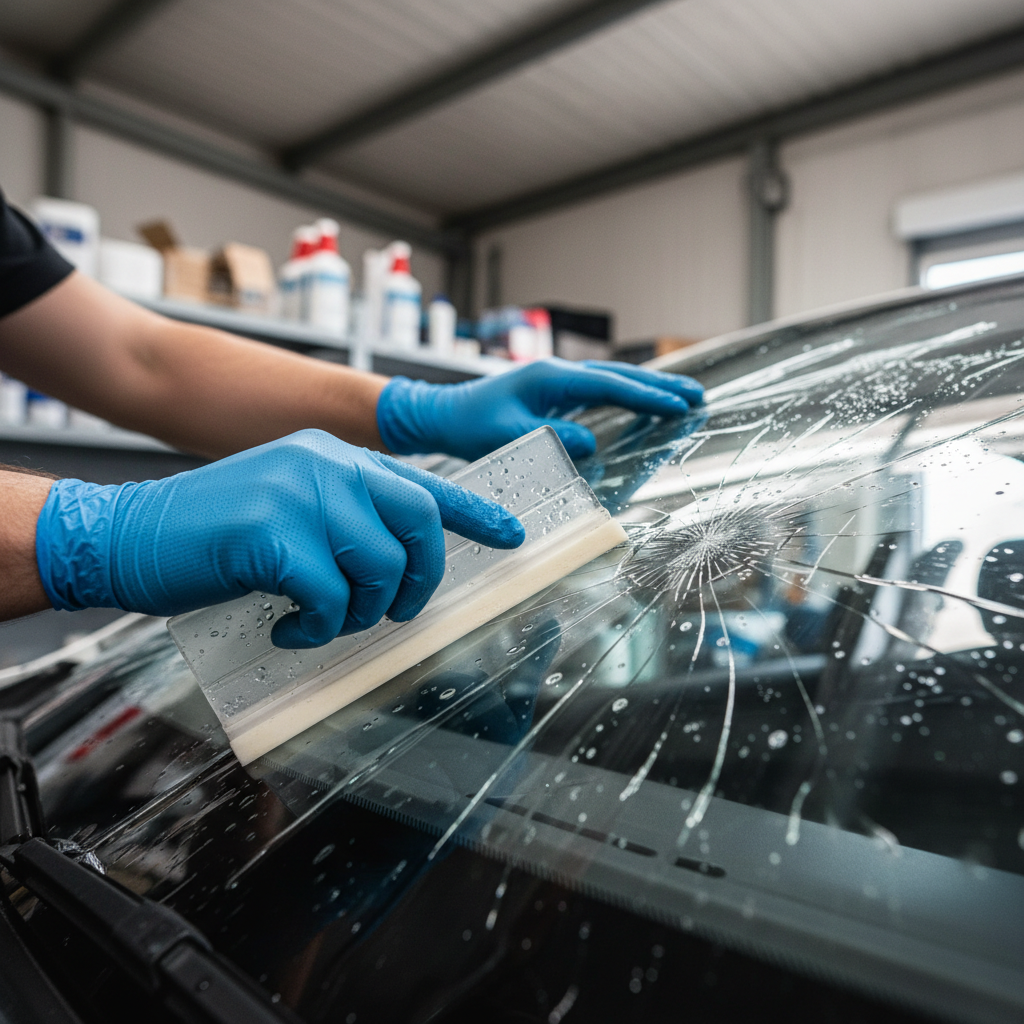
Glass presents a unique set of challenges compared to automotive paint. While glass is physically harder than a clear coat, its surface is not perfectly smooth at a microscopic level. It contains tiny pores where calcium and magnesium deposits easily take root. When these minerals settle, they create a persistent hazing that standard cleaners cannot touch. This cloudy film is particularly dangerous during night driving in Upper Darby, as it catches the light from oncoming traffic and creates blinding glare.
A clay bar is often the first tool used for glass. It effectively shears off protruding surface contaminants like industrial fallout or tree sap. However, when owners find that water spots on the windshield won't come off even after aggressive scrubbing, it indicates the minerals have chemically bonded within the glass pores. At this stage, the deposits have become part of the surface structure, rather than just sitting on top of it.
To address this, EchoShine utilizes mechanical glass polishing. This process differs significantly from paint restoration and protection; it requires specialized cerium oxide compounds and high-speed rotary polishers to physically level the glass surface. By mechanically removing the top microscopic layer of the glass, we eliminate the bonded minerals and restore absolute clarity. This precision work is frequently combined with headlight restoration to ensure every transparent surface provides maximum safety. For severe mineral buildup, professional glass polishing is the only reliable method for hard water spots on car removal that guarantees a crystal-clear finish.
How to Fix Water Spot Etching Damage on Car Paint
When minerals sit on the paint surface for extended periods, they do not just stay on top; they react with the clear coat to create physical depressions. To identify this Stage 3 damage, perform a simple tactile test. Run a clean fingernail across the white ring. If you feel a distinct catch or a "crater" in the surface, the paint is officially etched. At this point, no amount of chemical hard water spots on car removal will work because the mineral may be gone, but the physical scar remains.
Repairing this damage requires a process known as paint correction. This is not a simple wax or polish; it involves using specialized abrasive compounds and machine polishers to safely remove a microscopic layer of the surrounding clear coat. By leveling the surrounding area to the depth of the etched crater, the surface becomes flat and reflective again. This is a precision-based part of paint restoration and protection.
Precision is critical because the clear coat on a modern vehicle is thinner than a Post-it note. If a DIYer or an inexperienced operator removes too much of this protective layer, the paint will lose its UV resistance, eventually leading to clear coat failure or peeling. Because of these tight tolerances, EchoShine utilizes depth gauges to measure paint thickness before beginning any professional mobile detailing correction. This data-driven approach ensures the etching is removed while preserving enough clear coat to protect the vehicle for the long term. If the etching is too deep to safely level, we prioritize the integrity of the paint over total removal to prevent permanent clear coat failure.
Professional Solutions and Long Term Prevention
When topical cleaners fail, EchoShine employs professional grade acid baths to chemically neutralize alkaline minerals. This step safely breaks the bond of Stage 2 deposits before any friction is applied. For etched surfaces, we utilize mechanical polishing during paint restoration and protection to level the clear coat and restore the vehicle's luster. Unlike consumer products, these professional solutions are carefully calibrated to be aggressive toward minerals while remaining safe for automotive finishes.
Effective prevention shifts the focus from correction to protection. Applying a ceramic coating or high quality sealant creates a dense, hydrophobic barrier. These coatings increase the surface tension of the paint, causing water to bead and roll off rather than spreading and drying into a mineral crust. This protective layer makes future hard water spots on car removal significantly easier because minerals cannot penetrate the pores of the coating.
For home maintenance in Havertown, a proper drying routine is essential. Always use a high quality microfiber drying towel or a dedicated automotive air blower immediately after rinsing. Never allow tap water to air dry in the sun, as this is the primary cause of mineral bonding. Scheduling regular professional mobile detailing ensures these protective layers remain intact, safeguarding your investment against the local hard water supply.