Windshield wiper scuff marks removal can be achieved by polishing the glass with cerium oxide and a specialized felt pad, but this process carries risks of creating optical distortion if performed incorrectly. While shallow hazy lines often buff out, any scratch deep enough to catch a fingernail usually requires professional replacement to maintain structural integrity and clear visibility.
Few things are more frustrating for a driver than the blinding glare of sunlight catching the arced scuff marks left by worn windshield wipers. While these hazy lines may seem like minor cosmetic imperfections, they significantly compromise your visibility during nighttime driving and inclement weather by scattering light across your field of vision. Many Pennsylvania vehicle owners attempt to resolve these issues using viral home remedies or aggressive DIY polishing kits, but these unrefined methods often result in permanent optical distortion or structural weakening of the glass. In this guide, we will analyze the critical difference between surface scuffs and deep scratches, debunk common internet myths like the toothpaste method, and explain why professional grade correction is the only safe way to restore clarity. You will also learn practical maintenance strategies to prevent future damage and ensure your windshield remains a clear, reliable barrier on the road.
The Difference Between Wiper Scuffs and Deep Glass Scratches
Identifying the exact nature of the damage on your windshield is the first step toward restoration. Not every arc-shaped mark left by a wiper blade is a permanent gouge in the glass. Most drivers in the Havertown area encounter two distinct types of visibility issues: scuffs and scratches.
A scuff is a topical buildup rather than a structural defect. It consists of a hazy, semi-transparent layer of road film, mineral deposits from local hard water, and degraded rubber residue from the wiper blades themselves. In Upper Darby, environmental factors significantly accelerate this process. The high humidity levels combined with aggressive road salt used during PA winters create a chemical bond between these contaminants and the glass surface. This residue eventually hardens, creating a stubborn film that obscures vision without actually breaking the glass surface.
Conversely, a scratch is a physical groove where the glass has been carved out. This usually happens when grit, sand, or a completely worn wiper blade’s metal arm makes direct contact with the glass. To determine which issue you are facing, you can perform the fingernail test. Gently run your nail across the mark. If your nail slides over the area but detects a slight bump or haze, you are likely looking at a scuff. If your nail drops into a groove or makes a distinct click as it catches an edge, the glass is physically damaged.
Understanding this distinction is vital for effective windshield wiper scuff marks removal. While scuffs can often be resolved through professional mobile detailing techniques, deep scratches require a different, more intensive restoration approach. Our Upper Darby mobile detailing experts use this diagnostic phase to ensure the integrity of the glass remains intact before any polishing begins.
Why Windshield Wiper Scuff Marks Are a Major Safety Hazard
The danger of these marks lies in the physics of light refraction. On a pristine windshield, light passes through the glass in a predictable path, providing a clear view of the road. However, when the surface is coated in a hazy arc of mineral deposits and rubber residue, it creates a microscopic texture that catches and scatters light in multiple directions. This phenomenon is particularly hazardous during the 'golden hour' when the sun is low on the horizon, or at night when facing oncoming LED headlights. Instead of seeing a sharp image, the driver experiences a 'white-out' effect where the entire windshield seems to glow with a blinding, opaque glare.
In Pennsylvania, particularly during the frequent rainy periods in Upper Darby and Havertown, this lack of clarity is a leading cause of driver fatigue and accidents. When rain hits a scuffed windshield at night, the water droplets cling to the uneven texture of the scuff rather than sheeting off. This further distorts the light from streetlamps and traffic signals, turning a routine commute into a high-stress navigation exercise where pedestrians or road hazards become nearly invisible.
Many drivers ask why their wipers seem to be scratching the glass even after installing new blades. The answer often lies in the scuffs themselves. The buildup of road film creates a high-friction environment that prevents the wiper blade from gliding smoothly. This causes the blade to 'chatter' or skip across the glass. As the blade jumps, it can trap road grit against the surface or allow the blade’s structure to make intermittent contact, leading to the very scratches you are trying to avoid. Prioritizing windshield wiper scuff marks removal as part of comprehensive detailing packages is not just an aesthetic choice; it is a critical safety measure to restore the optical integrity of your vehicle’s most important safety window.
Debunking Viral DIY Hacks: Toothpaste, WD-40, and Baking Soda
Social media platforms are frequently flooded with life hacks claiming that everyday pantry items can restore vehicle glass, but these suggestions often ignore basic chemistry and material science. Toothpaste is perhaps the most cited remedy. While it contains mild abrasives like silica to clean tooth enamel, glass is significantly harder on the Mohs scale. Toothpaste lacks the specific cutting power required for effective windshield wiper scuff marks removal. Instead of polishing the surface, it often leaves behind a sticky, glycerin-based residue that attracts road dust and creates stubborn streaks as soon as your wipers are activated.
WD-40 is an even more problematic suggestion. As a penetrating oil and lubricant, it does not actually remove scuffs; it merely hides them by filling the microscopic texture with oil. The temporary illusion of clarity vanishes the moment it rains. The oil spreads across the glass, creating a dangerous, rainbow-colored smear that catches the light of oncoming traffic. This oily film is notoriously difficult to strip and can degrade the rubber components of your wiper blades over time.
Baking soda is also a common mistake for PA drivers. When mixed with water, it creates a paste with inconsistent grit. Because baking soda particles do not break down uniformly during use, they can actually introduce new micro-scratches into the glass. These small abrasions increase the surface area for mineral deposits to bond, making the original haze worse. For residents seeking Upper Darby mobile detailing, it is important to remember that glass restoration requires specialized compounds. Attempting these hacks often results in a more expensive correction later, whereas professional mobile detailing uses controlled, industry-grade abrasives designed specifically for the density of automotive safety glass.
The Hidden Danger of DIY Glass Polishing Kits

Transitioning from household remedies to specialized glass repair kits might seem like a logical step, but these products often introduce a higher level of risk to your vehicle. Most kits found on retail shelves or online marketplaces rely on Cerium Oxide, a rare-earth mineral compound. While Cerium Oxide is indeed the industry standard for glass restoration, its effectiveness depends entirely on precise application variables that DIY kits cannot provide. These packages usually include a felt pad intended for use with a household power drill, which lacks the stability and specialized speed controls necessary for safe windshield wiper scuff marks removal.
The primary danger in a DIY approach is localized heat buildup. Automotive safety glass is a poor thermal conductor; it does not dissipate heat quickly. When an amateur uses a high-torque drill to polish a specific area, the friction generates intense heat in a concentrated spot. If the temperature differential between that spot and the surrounding glass becomes too great, the windshield can suffer a thermal shock, resulting in an immediate crack that necessitates a full replacement. Furthermore, excessive heat can damage the polyvinyl butyral (PVB) interlayer that holds the laminated glass together, leading to long-term structural weakness.
Even if the glass does not crack, the risk of optical distortion, or the 'lensing' effect, is significant. This happens when uneven pressure or prolonged polishing in one area thins the glass more than the surrounding surface. The result is a concave section that bends light incorrectly, making the road ahead appear wavy or distorted. This effect is permanent and cannot be reversed. Our professional mobile detailing process avoids these pitfalls by using professional-grade rotary tools and specialized cooling techniques. Our Upper Darby mobile detailing specialists possess the technical training to remove surface haze while maintaining a perfectly uniform thickness across the entire windshield, ensuring your view remains sharp and true.
The Professional Approach to Windshield Wiper Scuff Marks Removal

True restoration begins with a multi-stage decontamination process that goes far beyond a standard car wash. At EchoShine, we first utilize specialized chemical stripping agents to break down the oily road films and acidic salt residues unique to the Delaware County climate. This is followed by a mechanical clay bar treatment, which lifts microscopic grit and industrial fallout embedded in the glass surface. Only once the glass is surgically clean can the actual windshield wiper scuff marks removal begin.
Unlike the haphazard results of a household drill attachment, our Upper Darby mobile detailing specialists use professional-grade rotary or dual-action polishers equipped with dedicated rayon glass pads. These tools are engineered to maintain a consistent, flat contact patch, preventing the uneven pressure that leads to the dreaded lensing effect. We utilize specific glass polishing compounds that rely on controlled mechanical leveling rather than excessive heat. This distinction is critical; our goal is to eliminate the topical scuffing and mineral buildup without thinning the safety glass or compromising its structural integrity. By maintaining precise control over tool speed and surface temperature during the process, our professional mobile detailing team restores original clarity while ensuring the windshield remains safe and structurally sound for the road ahead.
Preventing Future Scuffs: Maintenance Tips for PA Drivers
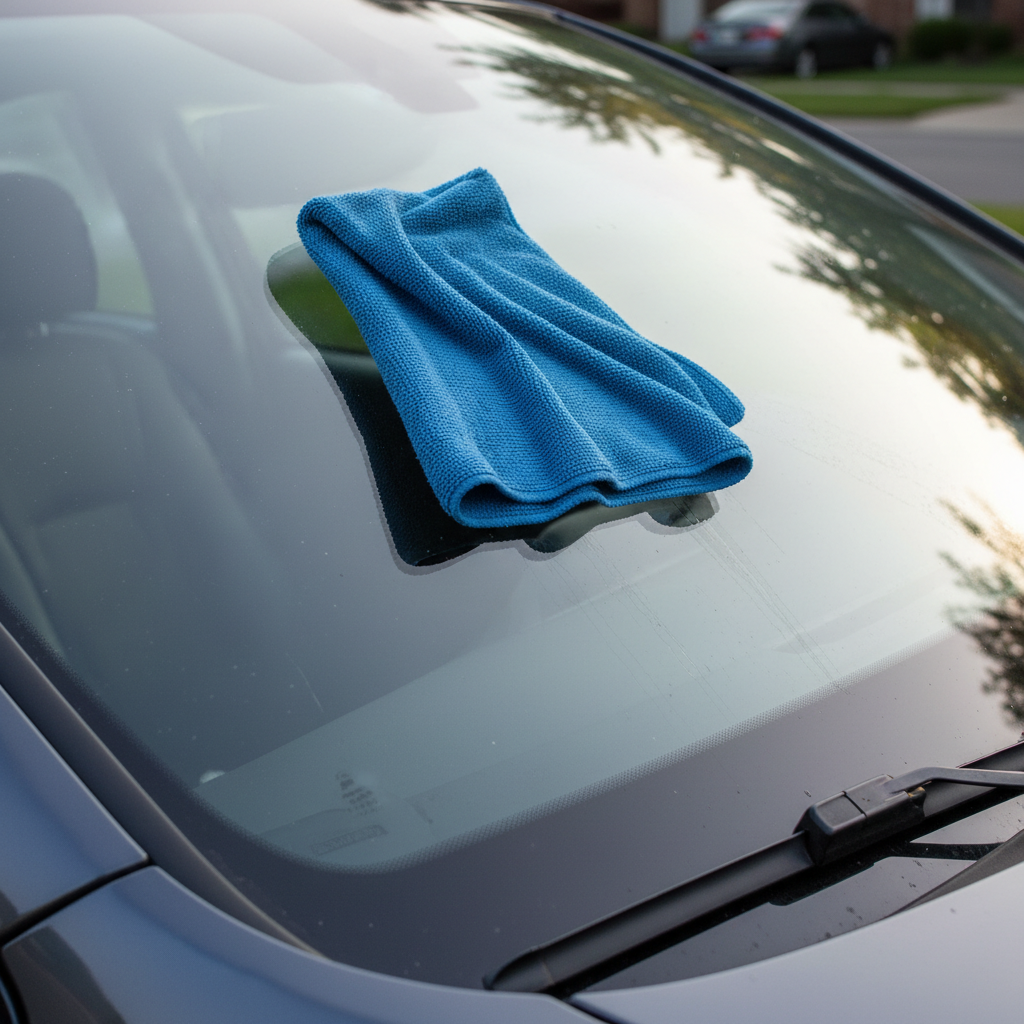
Maintaining a clear windshield in Delaware County requires a proactive approach to prevent environmental contaminants from bonding to the glass. One of the most effective habits is cleaning your wiper blades monthly with a microfiber cloth dampened with rubbing alcohol. This simple step removes the oxidized rubber and trapped road grit that act like sandpaper against the glass.
Avoid the common mistake of dry wiping. Using your wipers to clear a thin layer of dust, pollen, or road salt without sufficient washer fluid drags abrasive particles across the surface, creating the very haze you want to avoid. This is particularly relevant during the spring and fall in Havertown, when sap and debris from local foliage can create a sticky foundation for mineral deposits.
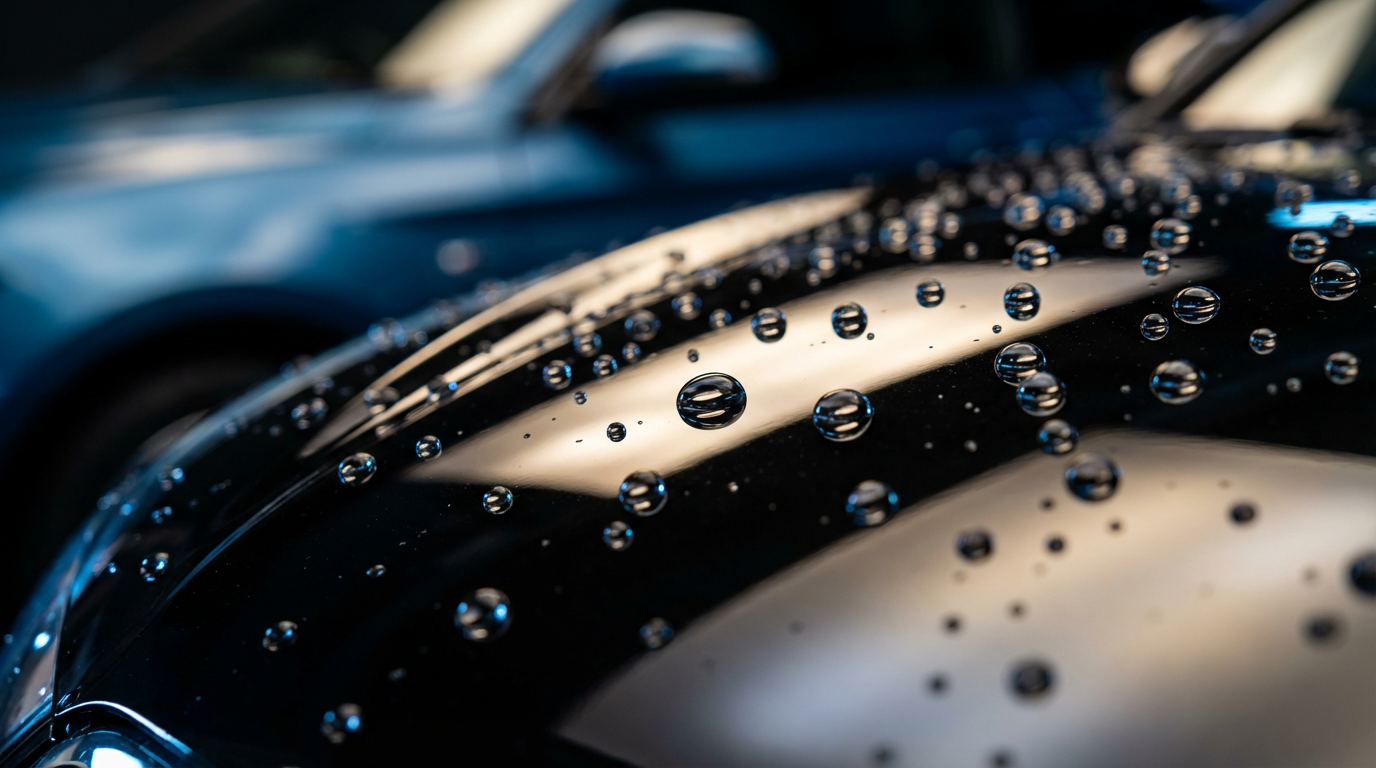
For long term protection, applying a professional grade hydrophobic coating is the gold standard. These coatings create a microscopic barrier that prevents water, sap, and road salt from chemically bonding to the surface. By reducing the friction between the blade and the glass, these treatments significantly decrease the likelihood of surface haze; they often make professional windshield wiper scuff marks removal unnecessary in the future. Integrating glass protection into your comprehensive detailing packages ensures that your Upper Darby mobile detailing service provides lasting visibility and safety through every season.
While polishing scuff marks at home might seem like a simple fix, the risk of creating permanent optical distortion is significant. Protecting your visibility is the most important part of vehicle maintenance. If you want expert help restoring your windshield to its original clarity, our team is ready to assist. You can view our full range of Services to see how we provide professional care without the risks of DIY methods. Let us help you keep your view of the road perfectly clear.